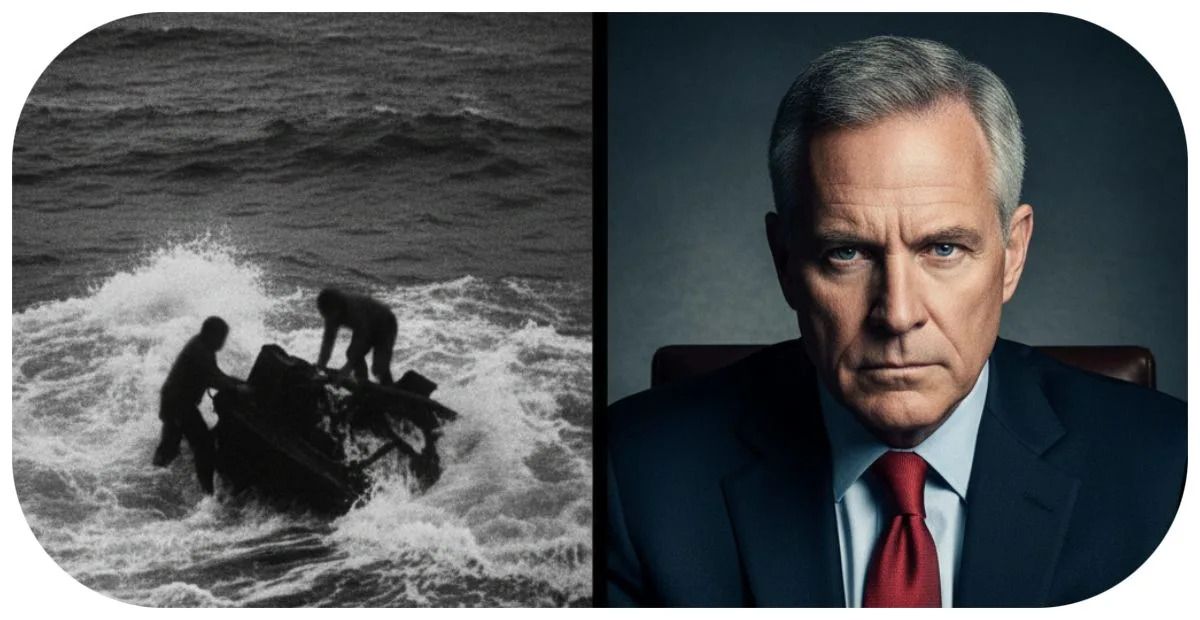
A shocking military report has thrust the Pentagon into a fierce controversy, alleging that U.S. forces carried out a second missile strike on a suspected drug smuggling boat in the Caribbean last September—even after survivors were seen clinging to the wreckage.
The incident, which occurred on September 2, 2025, is now at the center of a growing political firestorm, with Defense Secretary Pete Hegseth facing intense scrutiny over the rules of engagement in the ongoing “war on cartels.”
What the Report Says Happened
According to documents first obtained by The Washington Post, a U.S. aircraft initially fired on a speedboat flagged as a narcotics trafficking vessel off the coast of Venezuela. The strike disabled the boat, scattering debris and leaving survivors in the water.
Surveillance footage reviewed in real-time reportedly showed at least two individuals, injured but alive, pulling themselves back onto the sinking hull. Despite this, a decision was made to launch a second strike, which destroyed the remains of the vessel and killed the survivors.
The Pentagon has confirmed the strike was part of Operation Southern Spear, a counter-narcotics initiative, but has defended the action. Officials stated the individuals were believed to be attempting to recover narcotics and were still considered a “potential threat.”
Hegseth in the Hot Seat
The report places Defense Secretary Pete Hegseth directly in the line of questioning. Sources allege that prior to the mission, Hegseth issued a aggressive verbal directive. While he has publicly stated that the tactical decision for the follow-on strike rested with the on-scene commander, Admiral Frank “Mitch” Bradley, lawmakers are demanding to know what level of authority and what specific rules of engagement were approved from the top.
A bipartisan group in Congress is calling for a full investigation, with some alleging potential violations of the laws of armed conflict. “Targeting survivors who pose no imminent threat isn’t national security; it’s a potential war crime,” said one Democratic senator on condition of anonymity.
Legal and Ethical Quagmire
The event raises profound legal questions. The Trump administration has framed the fight against drug cartels as an “armed conflict,” a classification that grants the military wider latitude. However, international law experts are deeply concerned.
“Even in a recognized armed conflict, you cannot target people who are hors de combat—out of the fight due to injury or surrender,” explained a former military lawyer. “The obligation shifts to capturing or assisting them, not executing them.”
The families of the deceased, who were reportedly Venezuelan nationals, have filed a complaint with the Inter-American Commission on Human Rights.
A Pattern of Escalation?
This strike is not an isolated event. Since September, U.S. forces have conducted over two dozen similar strikes in the Caribbean and Eastern Pacific, resulting in more than 80 fatalities. However, the decision to strike a clearly disabled vessel a second time appears to be a stark escalation.
The Pentagon maintains that all operations are lawful and necessary to stem the flow of fentanyl and other drugs. Secretary Hegseth, in a recent briefing, stood firm: “We are at war with savage cartels who poison our children. We will not let our service members hesitate in the face of threats.”
As congressional hearings are scheduled and internal reviews begin, the fallout from this single strike in the Caribbean continues to grow, challenging the boundaries of how America conducts its longest war.
