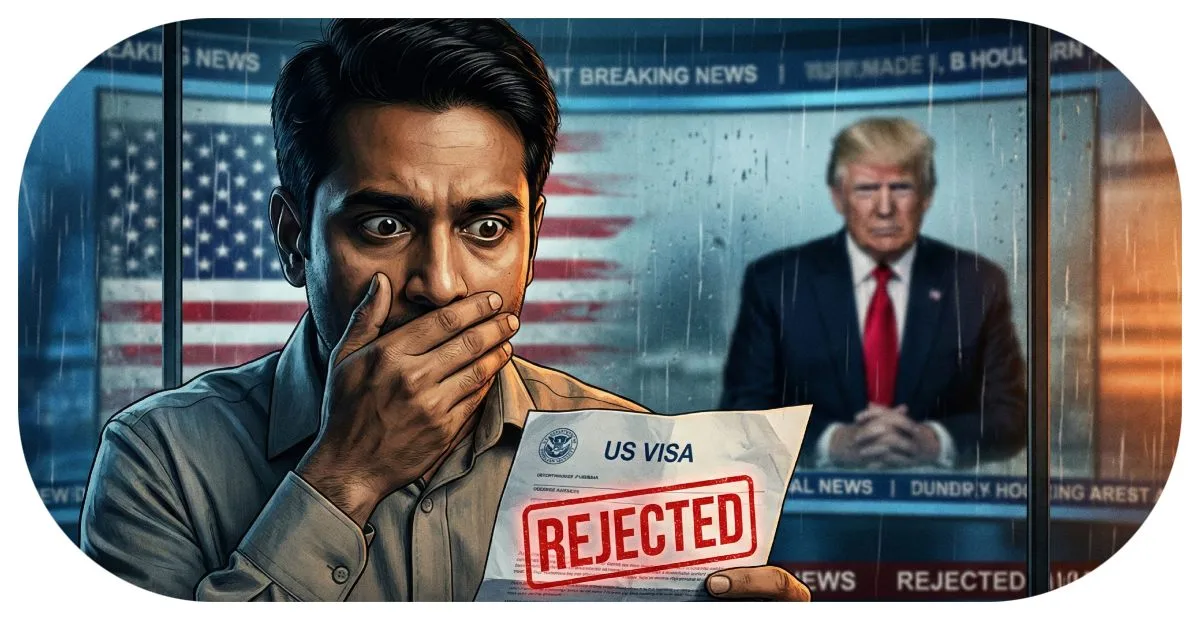
Imagine waking up to a headline that threatens to shatter your American dream. For thousands of Indians working toward careers in the US tech industry, that fear is now real. A proposed visa ban by Donald Trump targeting fact-checkers and content moderators has sent shockwaves through Indian professional circles. This is no longer just about policy — it’s about livelihoods, families, and futures.
For many Indians who’ve battled visa lotteries, night-long coding sessions, and endless paperwork for a chance in Silicon Valley, the news feels deeply personal. Trump’s latest move could stop those dreams even before they begin. Here’s what the proposed Trump visa ban for fact-checkers really means — and why Indians are most affected.



What Is the Trump Visa Ban for Fact-Checkers?
At the center of the controversy is a State Department memo issued on December 4, 2025. It directs consular officers to deny H-1B visas to individuals linked to what the administration calls “censorship of American speech.”
This includes professionals working in:
- Fact-checking
- Content moderation
- Trust and safety
- Compliance roles at major tech companies
Officials are now instructed to deeply examine resumes, LinkedIn profiles, and even social media posts to identify past moderation work. If someone has flagged fake news or harmful content, they could now be labeled a “censor.”
For Indians, this is especially worrying. Over 70% of H-1B visas go to Indian nationals, many of whom work in tech roles that now fall under this high-risk category.
Why Is Trump Targeting Fact-Checkers Now?
Trump’s hostility toward big tech dates back to his bans from major platforms after the January 6, 2021 riots. Since then, he has repeatedly accused tech companies of silencing conservative voices.
The administration argues that foreign workers should not be allowed to “muzzle” American speech. Critics, however, see this as political retaliation against platforms that challenge misinformation.
For many Indian professionals who built careers around protecting users from fraud and hate, being branded as “censors” feels like betrayal.
Why the H-1B Visa Matters So Much
The H-1B visa is the backbone of America’s tech workforce. From software development to artificial intelligence and content safety, companies heavily depend on skilled foreign workers.
Indian professionals dominate this space and contribute billions to the US economy. But under Trump’s tougher immigration push, professionals in content moderation now face greater scrutiny and higher rejection risks.
For a young Indian engineer dreaming of Meta or Google, a visa rejection due to past moderation work can be devastating.
Direct Impact on Indian Professionals
Thousands of content moderation jobs are outsourced to India. Large firms like Accenture and Cognizant employ massive teams for these roles.
Now, applicants from cities like Bengaluru and Hyderabad could see visa rejections simply because their job history includes fact-checking. Talent may be forced to stay back, and global career paths could suddenly collapse.
The Emotional Hit on Families
The impact goes far beyond individuals. Many H-1B holders bring spouses on H-4 visas, who are now also under scrutiny. Families face the fear of separation, children’s education plans being disrupted, and parents back home worrying endlessly.
In Indian communities abroad, anxiety is spreading fast. Festive celebrations now come with uncertainty and silent fears.
Experts Warn of Serious Risks
Trust and safety expert Alice Goguen Hunsberger has called the move alarming, stressing that moderation protects users from child abuse, scams, and fraud. First Amendment scholars warn that the ban could itself violate free speech principles.
Ironically, those who work to protect users online are now being punished.
Economic Ripple Effects
The ban could hurt both economies:
- US companies may face talent shortages and higher hiring costs.
- India could see a drop in remittances, which currently exceed $80 billion annually.
- Tech operations may shift further to India, hurting US innovation.
The result: job losses, delayed projects, and growing uncertainty.
Is Social Media Censorship the Real Issue?
The global debate over censorship in social media is only intensifying. Trump’s move could discourage professionals from participating in platform safety — risking an explosion of unchecked misinformation.
For Indian workers, the message is troubling: protect users, and risk your future.
How Are Indians Reacting Online?
Social media is flooded with concern. Indian professionals are openly warning others about H-1B risks. Many fear that years of honest safety work could now become a liability rather than an asset.
What Should H-1B Applicants Do Now?
With Trump’s immigration policy growing tighter, experts suggest:
- Reviewing resumes and online profiles carefully
- Consulting immigration lawyers
- Diversifying skills beyond moderation
- Exploring global opportunities in Canada, Europe, and India
Stories from the Ground
“Raj,” a content moderator who flagged election misinformation, now fears his US dreams are over. His family depends on his visa. Stories like his reflect the human side of this policy — the pain behind political decisions.
Global Response to Trump’s Immigration Push
The move has drawn criticism from international allies and free speech advocates. India, which has the largest H-1B workforce, is watching developments closely.
Can the Ban Be Challenged?
Legal challenges, public petitions, and civil rights lawsuits are expected. Affected professionals are being urged to stay informed and unite.
What Lies Ahead for Tech Immigration?
If the policy continues, skilled Indians may increasingly turn toward Canada, the EU, or India’s booming startup ecosystem. The American dream may still exist, but its pathway is clearly changing.
Final Word: Don’t Let the Ban Kill Your Ambition
Indian professionals have always turned obstacles into opportunities. Whether in Silicon Valley or Bengaluru, talent will always find a way. Stay sharp, stay united, and never stop building.
Conclusion
The Trump visa ban for fact-checkers and content moderators is more than a political move — it’s a decision with life-changing consequences for Indian professionals. From job insecurity to family distress and economic disruption, the ripple effects are massive. While experts warn that moderation is critical for online safety, current policies are moving in the opposite direction.
Yet history shows that Indians thrive even under pressure. The route to global success may change, but ambition does not. The future of tech immigration is uncertain, but Indian talent remains unstoppable.
FAQs
What is the Trump visa ban for fact-checkers?
A policy directive to deny H-1B visas to those involved in content moderation or fact-checking.
Why are Indians most affected?
Indians receive over 70% of H-1B visas, many in tech moderation roles.
Can rejected applicants appeal?
Yes, but the process is long and complex.
Is the ban permanent?
No. It can be challenged legally and altered by future governments.
How can applicants protect their applications?
By consulting immigration lawyers and reshaping profiles carefully.
